
Need solar help in Dallas-Fort Worth?
If your original solar company is gone, adding a battery can quickly become confusing. Solar Repair Pros helps Dallas-Fort Worth owners check whether the existing solar system, inverter setup, electrical panel and backup goals support a realistic solar battery add-on.
Solar System Problems?
We Can Help
BATTERY PLANNING QUESTIONS
A battery should solve a real need, not become another expensive mystery on the wall. Before equipment is selected, the existing system, backup expectations, load list, compatibility and panel capacity all need to be understood.
Decide which circuits matter during an outage and how long they should run before comparing battery options.
The existing inverter, solar layout, monitoring platform and equipment age influence how storage can be integrated.
Temperature, ventilation, clearances, weather exposure and cable routing all matter when a battery location is considered.
Panel space, service capacity, protective equipment and the proposed backed-up loads must be reviewed together.
BATTERY PLANNING
Battery storage sounds simple until it has to work with the solar equipment already on the wall. The existing inverter, electrical panel, backup expectations and household usage all affect whether an add-on is realistic. Sorting those details first helps avoid buying storage that cannot do the job you expected.
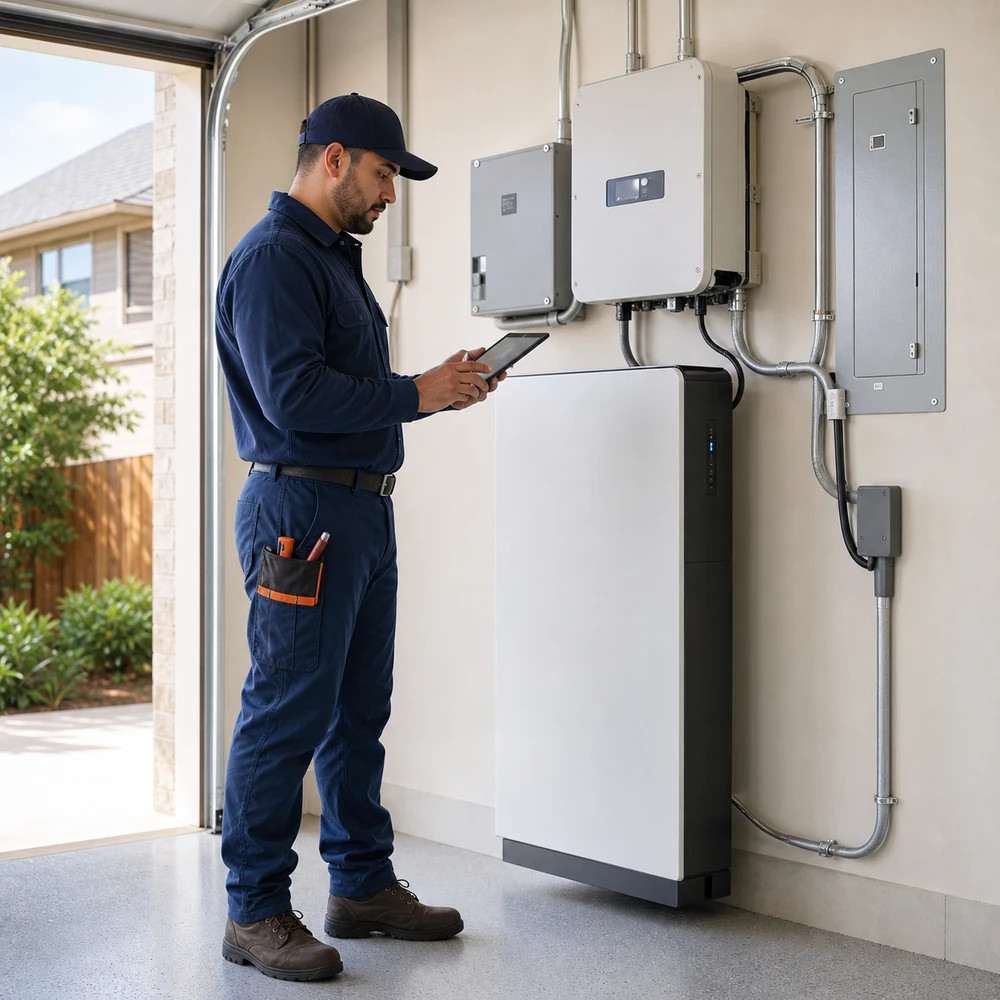
WHY SIZING MATTERS
Backup power can mean keeping a few essentials running or trying to support much larger household loads. Those two goals need very different planning. A useful battery recommendation starts with what you want powered, how long it must run, and what the existing system can safely support.
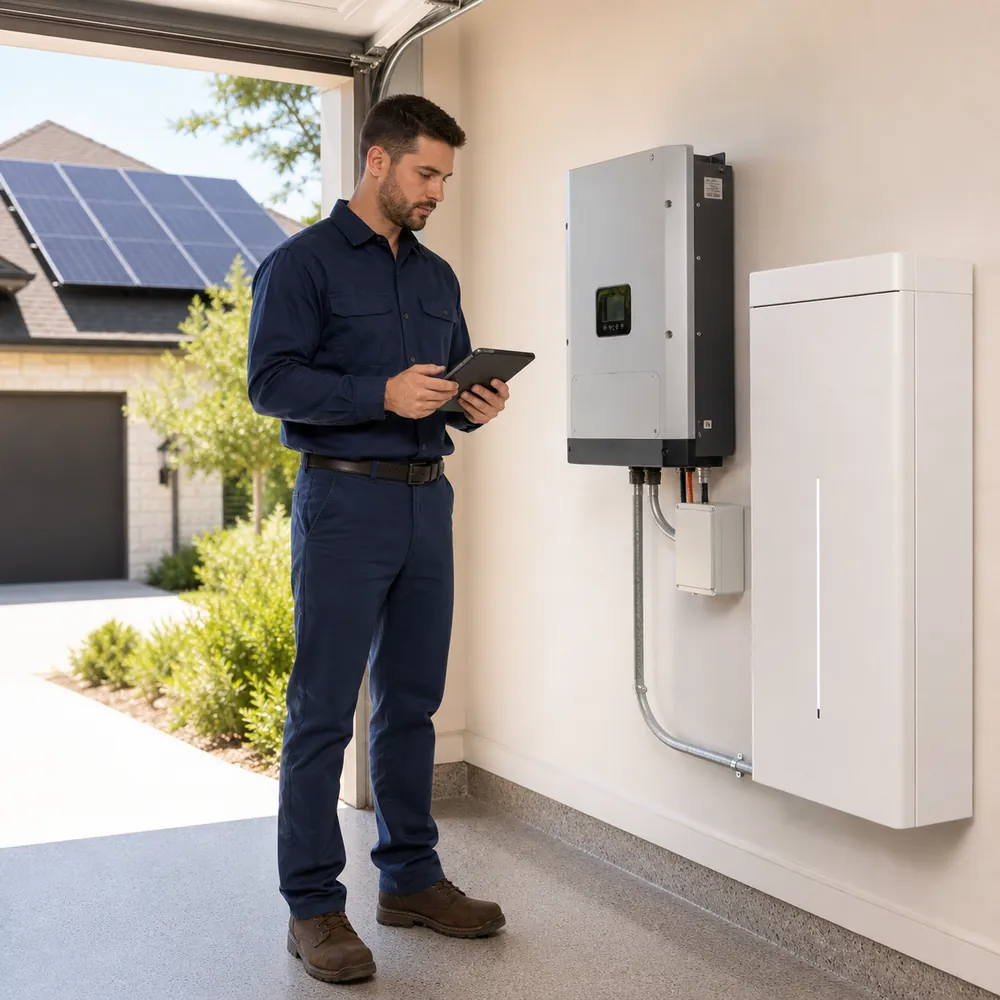
RELATED SERVICES
Battery planning often connects to solar repairs, inverter compatibility, electrical panel capacity and future EV charging. Reviewing these related services helps unsupported solar owners avoid choosing storage in isolation.
Fault diagnosis for output changes, damaged modules, connections and recurring solar alerts.
Condition and performance checks for existing panels, mounting and cable management.
Capacity and panel-space planning when storage needs additional electrical infrastructure.
Coordinate charging loads with panel capacity, solar production and future storage plans.
SOLAR BATTERY ADD-ONS FAQS
Useful answers for Dallas-Fort Worth homeowners comparing solar battery add-ons, backup expectations, inverter compatibility and the electrical limits of an existing system.
Not automatically. Inverter type, system age, equipment compatibility, warranties and the proposed integration method all need review. Some systems support direct options, while others may need additional equipment or a different design.
List the loads that matter during an outage, their power demand and how long you expect to use them. Essential loads are often separated from high-demand or nonessential circuits so the design reflects realistic priorities.
It depends on the air-conditioning starting and running demand, battery power output, inverter design and the other loads operating at the same time. This should be calculated rather than assumed from battery capacity alone.
The location must follow equipment instructions and applicable rules for clearances, temperature, ventilation, weather exposure and physical protection. Cable routing and access for future service also matter.
Possibly. Available breaker space, service capacity, panel condition and the proposed connection method all affect the answer. A panel review is part of responsible storage planning.