Need solar help in Dallas-Fort Worth?
If the company that installed your solar panels is no longer answering, a broken or underperforming system can feel like nobody owns the problem. Solar Repair Pros helps Dallas-Fort Worth owners understand the fault, review the system clues, and plan a practical solar panel repair path without guessing.
Solar System Problems?
We Can Help
REPAIR WARNING SIGNS
Low output, repeated alerts, visible panel damage, roof work, or missing installer support are signs that the system deserves a proper review. This section explains the common situations that lead Dallas-Fort Worth homeowners to request solar panel repair help.
A clear change from the system's normal production pattern can point to shading, soiling, inverter behavior, connection issues or a panel-level fault that needs closer testing.
Cracked glass, impact marks, lifted edges and damaged frames should be assessed because visible defects can affect weather protection, electrical safety or long-term performance.
Repeated inverter or monitoring alerts deserve context. The alert history, current readings and affected equipment help narrow down whether the issue sits at a panel, connection or system level.
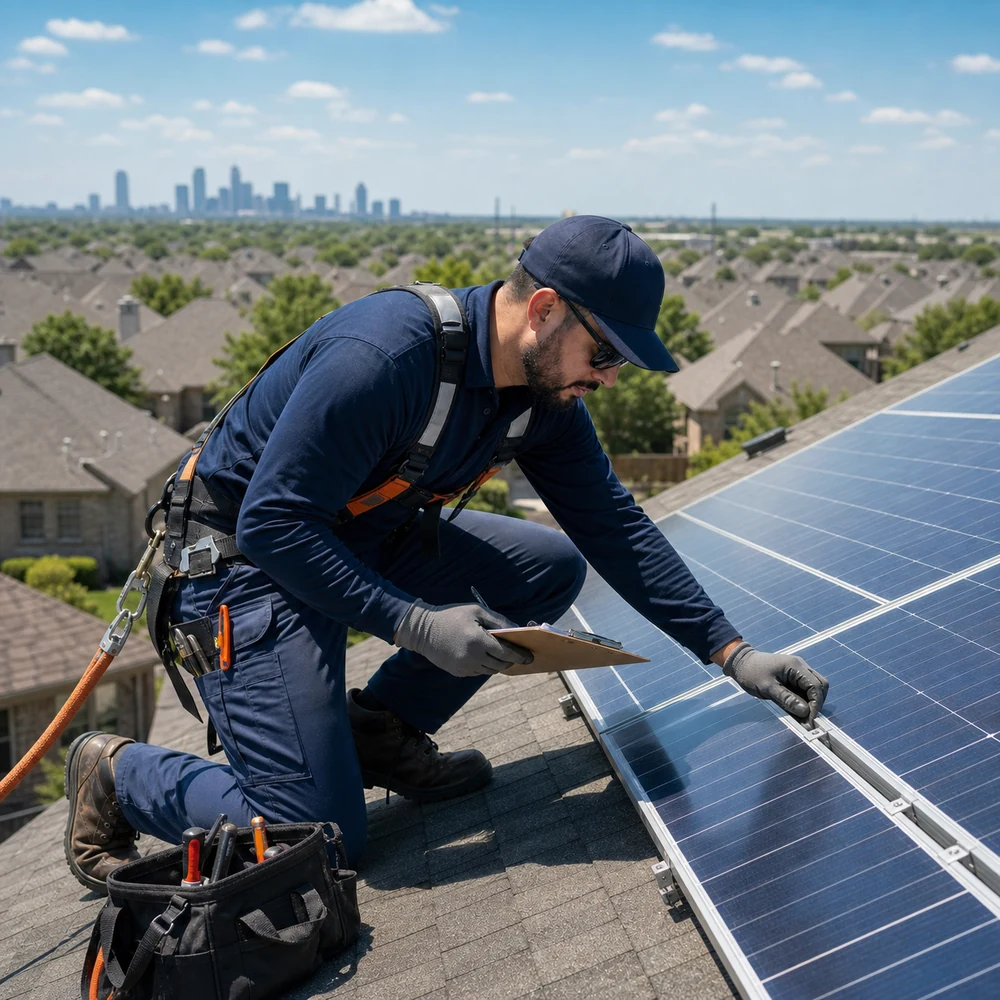
Loose clips, exposed cable runs, worn connectors or movement around rooftop equipment can create intermittent faults and should be checked before the condition becomes harder to trace.
WHEN SUPPORT DISAPPEARS
A failed installer leaves homeowners guessing who to call, what the app warnings mean, and whether the system is safe to keep running. Before parts are replaced, the repair needs to be traced back to the visible symptoms, monitoring history and equipment setup. That gives you a clearer path to a repair decision you can understand.
WHY DIAGNOSIS MATTERS
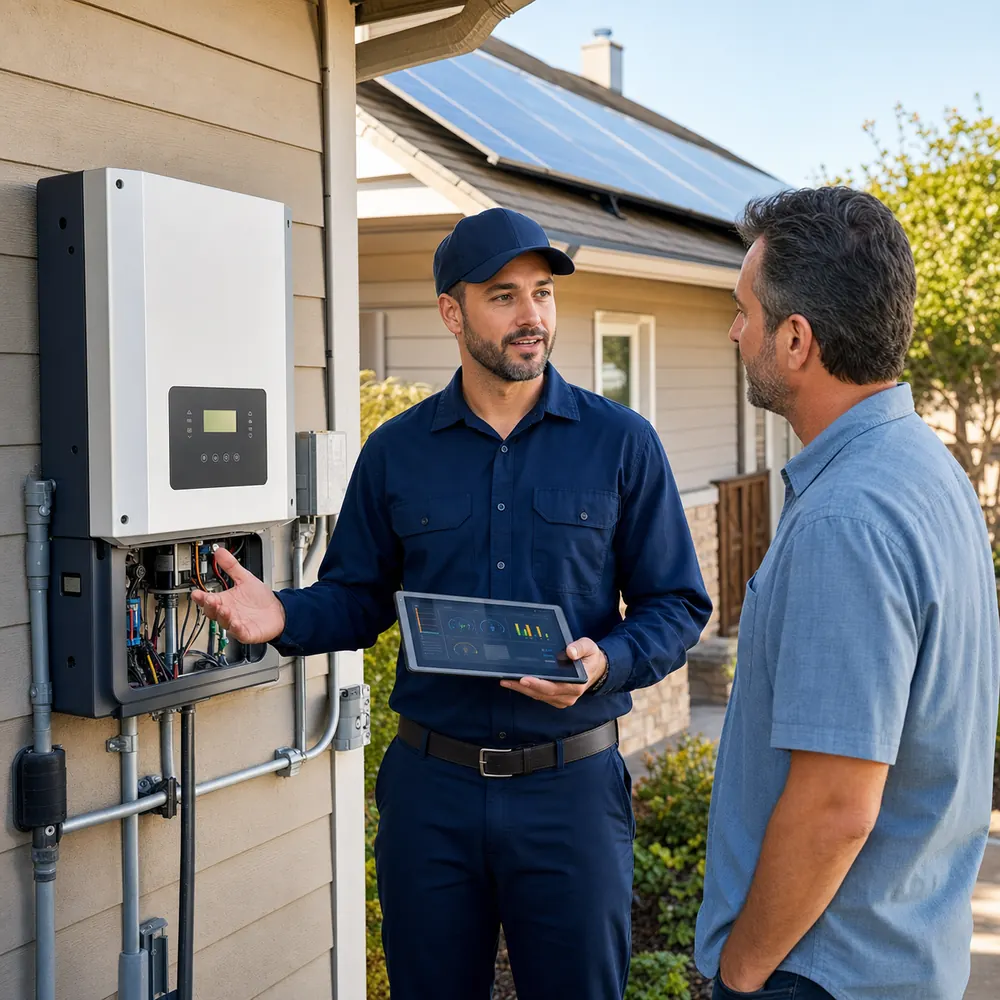
A drop in production can come from more than one place, and the wrong assumption can get expensive. Shade, heat, wiring, optimizer behaviour, inverter faults and monitoring issues can all point in different directions. A focused repair assessment helps separate normal variation from a problem that needs professional attention.
RELATED SERVICES
A solar repair visit may reveal a servicing need, storage compatibility question, panel-capacity issue or EV charging limitation. These related services help unsupported solar owners connect the repair problem to the next practical decision.
Planned condition and performance checks for existing arrays, including visible panel, mounting and cable-management concerns.
Compatibility and load planning for customers considering storage alongside an existing solar system.
Capacity and panel-space planning when solar, storage or charging equipment needs more electrical infrastructure.
Home charging plans shaped around vehicle needs, panel capacity, charger location and cable routing.
SOLAR PANEL REPAIR FAQS
Practical answers for Dallas-Fort Worth property owners dealing with production drops, panel damage, alert messages or a solar installer that no longer provides support.
Monitoring that shows one string, optimizer or section behaving differently can help narrow the search, but the equipment layout and monitoring design matter. A repair visit may need to compare readings, inspect connections and check whether the symptom follows one panel, one circuit or a wider system component.
Visible cracking should be assessed promptly, but the safe next step depends on the damage, electrical condition and whether the module can be isolated. Avoid touching the panel or nearby wiring. Photos and monitoring changes can help Solar Repair Pros prepare for the visit.
Send the recent daily production graph, any alert messages, the date the change began and a comparison with a similar period if available. Equipment model information and clear photos of the inverter or monitoring screen are also useful, provided no covers need to be removed.
Yes. High module temperatures can reduce output, while new shading from trees or nearby structures can change production at certain times of day. Those factors should be separated from wiring, connector, inverter or panel damage before a repair is chosen.
Panel dimensions, electrical characteristics and system compatibility all matter. If the original model is unavailable, the repair may require a careful comparison of suitable options, changes to the affected array section or advice from the system manufacturer or another specialist.