
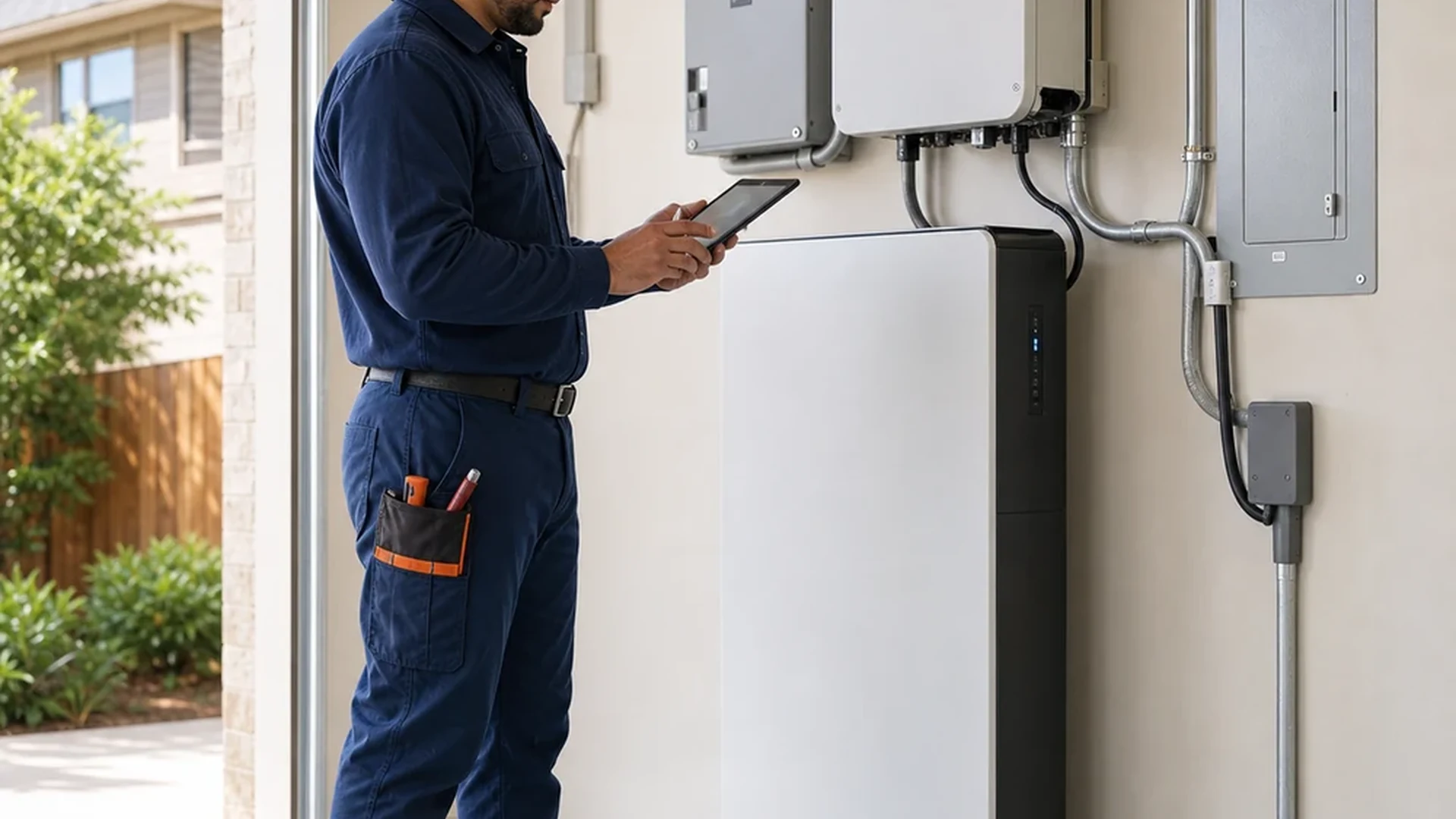
Adding a battery to an existing solar system is not only a question of choosing a capacity. The battery must fit the owner’s backup goals, the existing inverter and monitoring equipment, the electrical panel and the available installation location.
1. What do you want the battery to do?
Backup during outages, increased use of daytime solar and time-of-use shifting are different objectives. List the circuits that matter and how long they should operate. Refrigeration, lighting and communications often lead to a different plan from whole-home backup or central air-conditioning expectations.
2. Is the existing solar equipment compatible?
Inverter type, system age, manufacturer guidance and warranties influence the integration method. Some systems support a direct storage option, while others need additional equipment or a different design. Compatibility should be checked before equipment is ordered.
3. Can the electrical infrastructure support the plan?
Panel space, service capacity, protective equipment and the proposed backed-up loads all matter. A future EV charger or electric appliance should also be mentioned so the battery project does not create avoidable constraints for the next upgrade.
4. Where can the battery be installed?
Temperature, ventilation, manufacturer clearances, weather exposure, impact protection and cable routing affect the location. A convenient garage wall is not automatically suitable, and the final position may change the installation scope.
5. What information should you gather?
Provide solar and inverter model details, monitoring screenshots, a recent electricity bill, a list of important backup loads and photographs of the electrical panel and possible battery locations taken without removing covers.
Solar Repair Pros helps Dallas-Fort Worth customers frame storage decisions around real loads and the existing system before the final equipment and installation path are selected.
